What is MongoDB?
MongoDB is a NoSQL database that stores data in flexible, JSON-like documents instead of rows and tables like a traditional SQL database.
Basic MongoDB Structure
Database
   ├── Collection (like a table)
   │      ├── Document (like a row)
   │      ├── Document
   │      └── Document
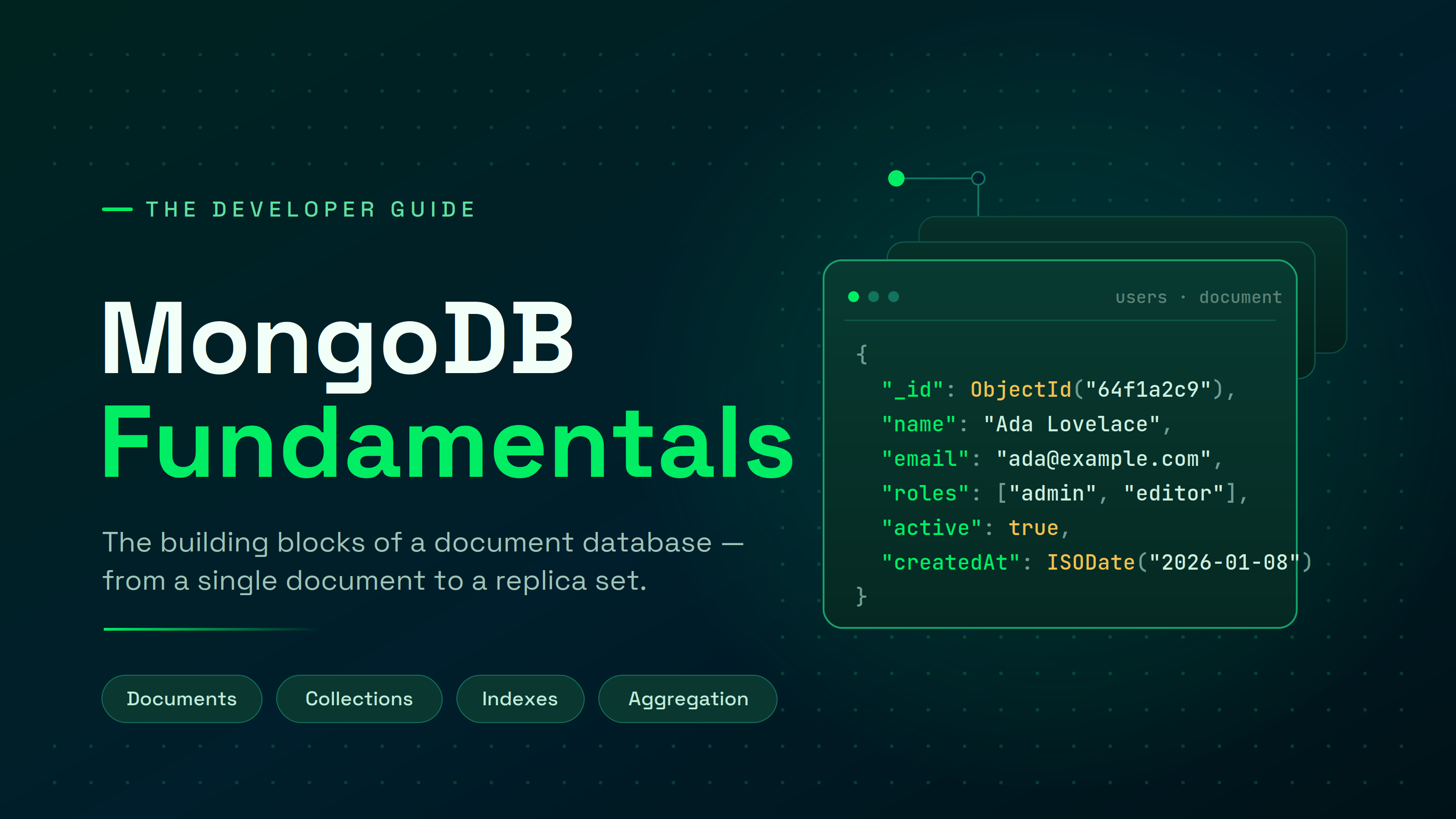
MongoDB stores it as a document:
{
  "_id":1,
  "name":"Alice",
  "email":"alice@email.com"
}
A collection can contain many such documents.
Why use MongoDB?
MongoDB is popular because it offers:
- Flexible schema – You can add new fields without changing the database structure.
- High performance – Fast reads and writes for many applications.
- Scalability – Easy to distribute data across multiple servers.
- Developer-friendly – Works naturally with JSON data used in web applications.
Common Use Cases
MongoDB is often used for:
- Web applications
- Mobile apps
- E-commerce websites
- Content management systems
- Real-time analytics
- IoT applications
Conclusion
MongoDB is the most popular NoSQL database. All big data applications make use of MongoDB as a default database. The future of MongoDB is bright, and professionals possessing MongoDB skills are preferred in the IT market. The demand for MongoDB is going to increase in the near future.
#mongodb #nosql #database #backend #webdev #devops